
A virtual trip, bringing France into the classroom (and the playground)
Back in 2018, I had the great pleasure of taking thirty-five nine and ten-year-olds to northern France for a week. I have so many happy memories of that trip, one of which was a grey morning in the town of Boulogne-sur-Mer, when we visited the market. The children had lots of fun looking around all the different stalls and then did a great job of using their French to buy souvenirs to take home. It was wonderful to see them communicating so confidently in French and watch the delight on their faces when they spoke, and were understood, in a language that up until that point they had only ever had the chance to practise in the classroom. And, of course, they were thrilled to buy lots of things to take home with them as reminders of the experience.
Since the Covid pandemic and Brexit, I sadly haven’t made a return school trip to France. However, when I began making some changes to my curriculum a couple of years back, I felt that it was incredibly important to try and recreate some of the magic of that trip and give my pupils the chance to use their language learning for practical purposes. With this in mind, I planned a unit of work – Au marché – for my Year 5 classes, which introduces the children to some key items that they might want to buy from the market; explores the use of du, de la and des (some); builds phrases using je voudrais (I would like); and recaps numbers to allow pupils to understand the responses to the question c’est combien? (how much is it?)

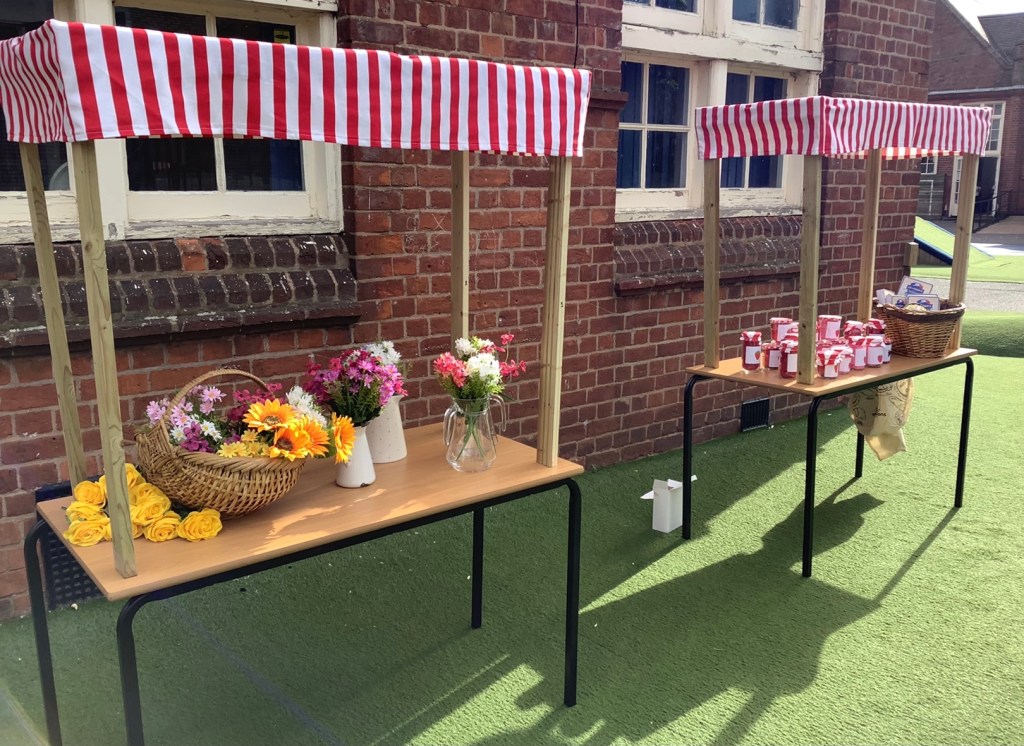
The final lesson in the unit involves a visit to a French market – set up in the school playground – and took a bit of work, as I wanted it to be as authentic as possible. Preparations started a couple of months before the event, with the first job being to create the stalls. They were a fabulous team effort between our Premises Officer, who created the frames for the canopies, and my mum-in-law, who is a sewing machine genius and created the striped awnings. Wood reclaimed from around our school site was used for the frames, to keep the costs as low as possible, and I sourced some cheap material online to create the red and white awnings. Then, all that was left to do was to put the canopies onto the desks to create the stalls selling bread, fruit and vegetables, flowers, cheese and jam. Just missing their enthusiastic Year 6 traders, here are a couple of the stalls ready for their first visitors.
To make the experience as authentic as possible, and to add further opportunities for speaking in French, I created these passports for the pupils to use before boarding a purpose-built ‘plane’, which I set up in my classroom. Constructed from display screens, complete with stapled-on windows and classroom chairs to act as plane seats, I even managed to source a little trolley with wheels – in fact a book trolley – for my Year 6 cabin crew to serve drinks from. After getting their passports stamped, the children watched this great little Air France safety briefing as we ‘took off’ and then ordered drinks from the cabin crew, before ‘landing’ and disembarking to begin their market shopping challenge.

The children were split into teams of four and issued with a laminated shopping list, detailing the items that they would need to buy on their trip, a wallet of plastic play euros and a little shopping bag. I made sure to include the key phrases that they might need during their interactions on the shopping lists, to enable the children to be as confident as possible when buying their items. They then worked as a group, taking turns to ensure that everybody got a chance to buy different items from the stall-holders.
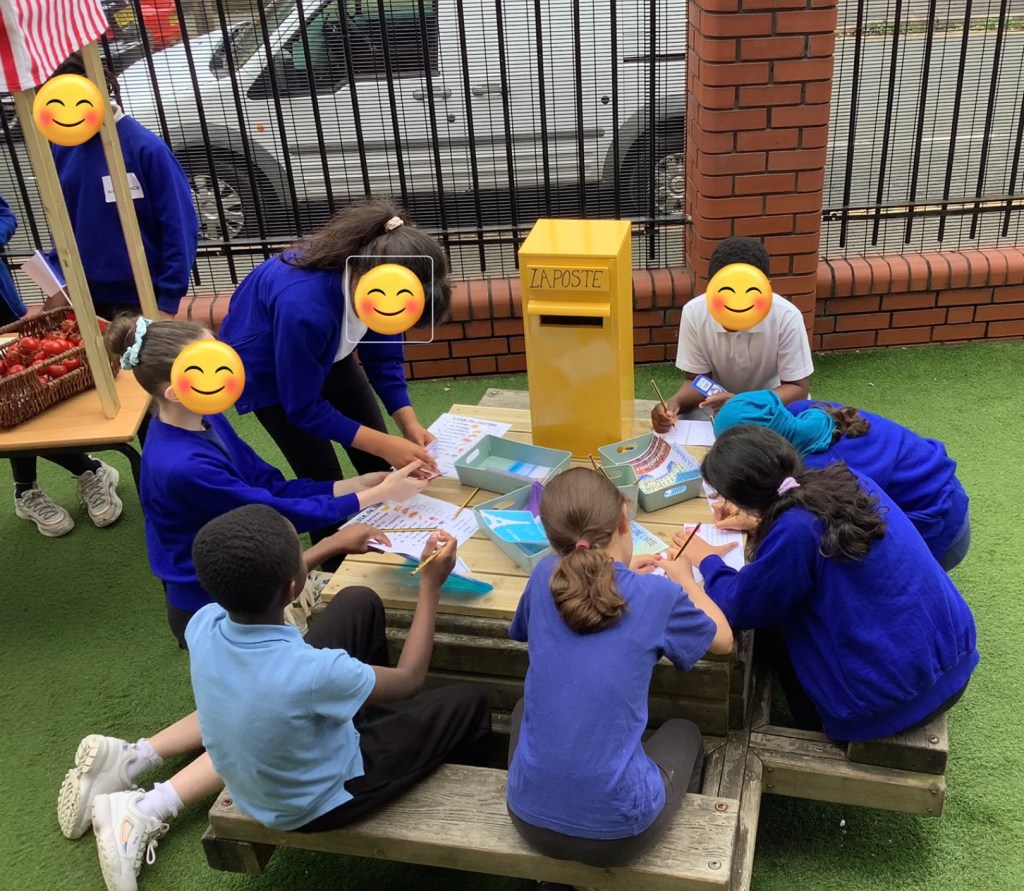
To make sure that any early finishers had plenty to keep them occupied, I set up an area for the children to write a postcard home detailing their experiences. Then, it was time to get back on our plane and return to class.
Planning, resourcing and running this very first ‘virtual French trip’ was a fairly time-consuming process but now that all the main resources are prepared, I’m hoping that it will be pretty straightforward too run year on year. It was definitely a brilliant ending to a really practical unit of work and helped to recreate some of the magic of a trip abroad, without even having to leave the school grounds.
 My Primary Languages Classroom